







The Enneagram and the Big Five Personality Traits
How are the Enneagram and Big Five personality traits connected?

On this page
The Enneagram of Personality and the Big Five are two approaches to describing personality differences.
In this post, I’ll cover:
- Comparison of the Enneagram and the Big Five
- Connections between the Enneagram and the Big Five
- Big Five dimensions for each Enneagram personality type
- Suggested reading
If you want to jump straight to the Big Five dimensions for a specific type, click the type here:
- Type 1: The Reformer
- Type 2: The Helper
- Type 3: The Achiever
- Type 4: The Individualist
- Type 5: The Investigator
- Type 6: The Loyalist
- Type 7: The Enthusiast
- Type 8: The Challenger
- Type 9: The Peacemaker
Comparison of the Enneagram and the Big Five
The Enneagram and the Big Five both provide descriptions of personality differences.
However, the Enneagram relies on a complex underlying theory of personality types and the origin of those types.
On the other hand, the Big Five relies on no underlying theory and simply describes the observed pattern of differences between people.
The Enneagram is a theory of personality
At its heart, the Enneagram of Personality, or Enneagram, is a theory of personality differences.
Not only does the Enneagram attempt to describe the range of personality differences, it also tries to describe why these differences exist.
The Enneagram theory defines nine personality types, the origin of each personality type (in terms of unconscious desires, drives, or fears), relationships among the types, each type’s responses to stress, and more.
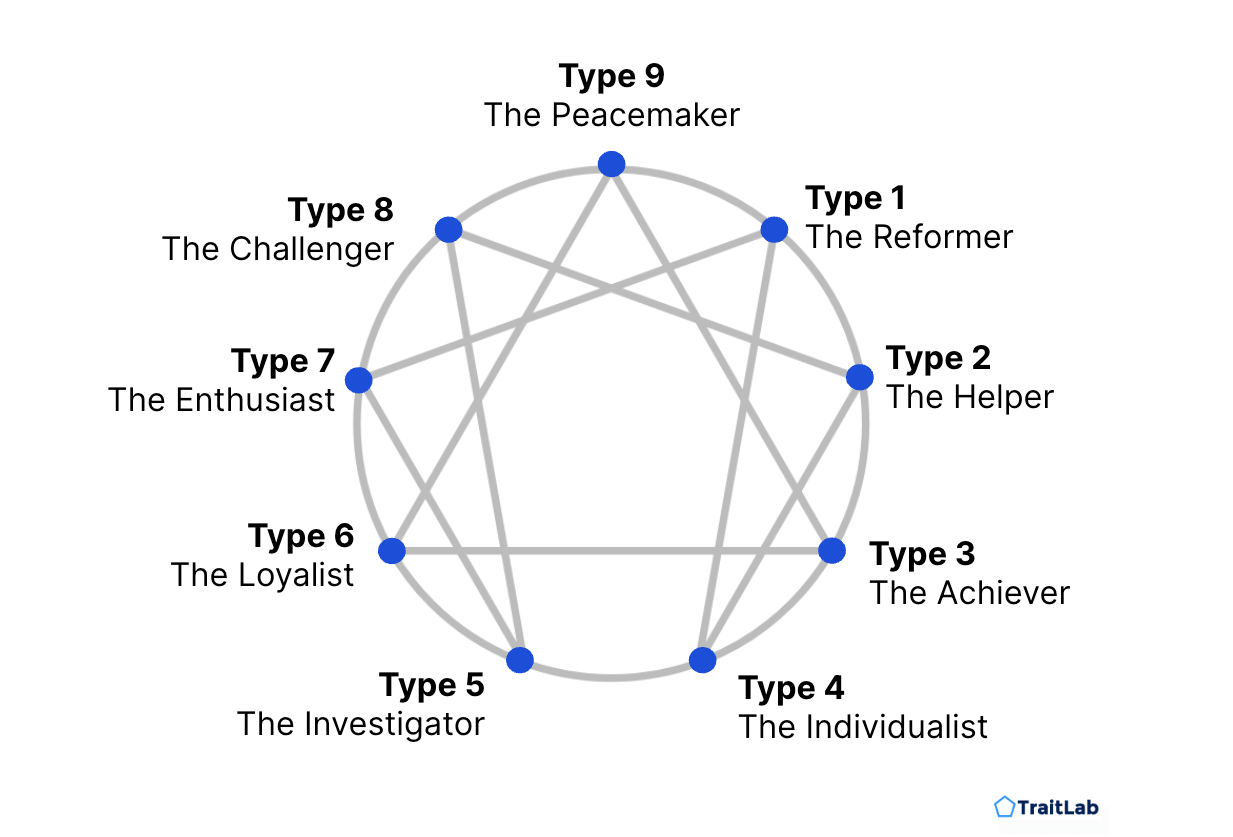
Specific details of the Enneagram theory vary across theorists and practitioners.
According to most Enneagram theorists, the nine types describe different patterns of thinking, feeling, and behaving. Depending on the theorist, these patterns may be described as passions, fears, fixations, traps, or ideas.
Each type also has a set of beliefs about its needs and how to meet them. These beliefs are often incorrect and can mislead each type, creating a cycle of unproductive behaviors and reactions.
For example, people classified as a Type 2: The Helper – or simply, Twos – have a false belief that they must be needed. This false belief can make Twos excessively people-pleasing and overly agreeable. In the best case, Twos are empathetic, helpful, and considerate caregivers. But at their worst, they can be clingy and needy sycophants.
Enneagram theorists claim that understanding one’s type allows one to notice and interrupt these characteristic patterns. Only by seeing these patterns clearly can one finally overcome them.
The Big Five is an observed pattern
The Big Five is a description of how personality traits correlate together. The Big Five describes which personality traits tend to clump together and organizes them in a hierarchical structure.
The Big Five says nothing about why these groupings of traits exist or what one should do about them. It simply describes the structure of personality traits as observed across millions of individuals.
The Big Five is not proprietary and gradually evolved over decades of academic research. The structure of the Big Five has been observed independently across several studies, research groups, samples, geographic locations, and cultures.
The “Five” in Big Five refers to five broad dimensions at the top of the Big Five hierarchy:
- Factor I: Extraversion (also called Surgency)
- Factor II: Agreeableness
- Factor III: Conscientiousness (also called Dependability)
- Factor IV: Neuroticism (also called Emotional Stability)
- Factor V: Openness to Experience (also called Intellect or Culture)
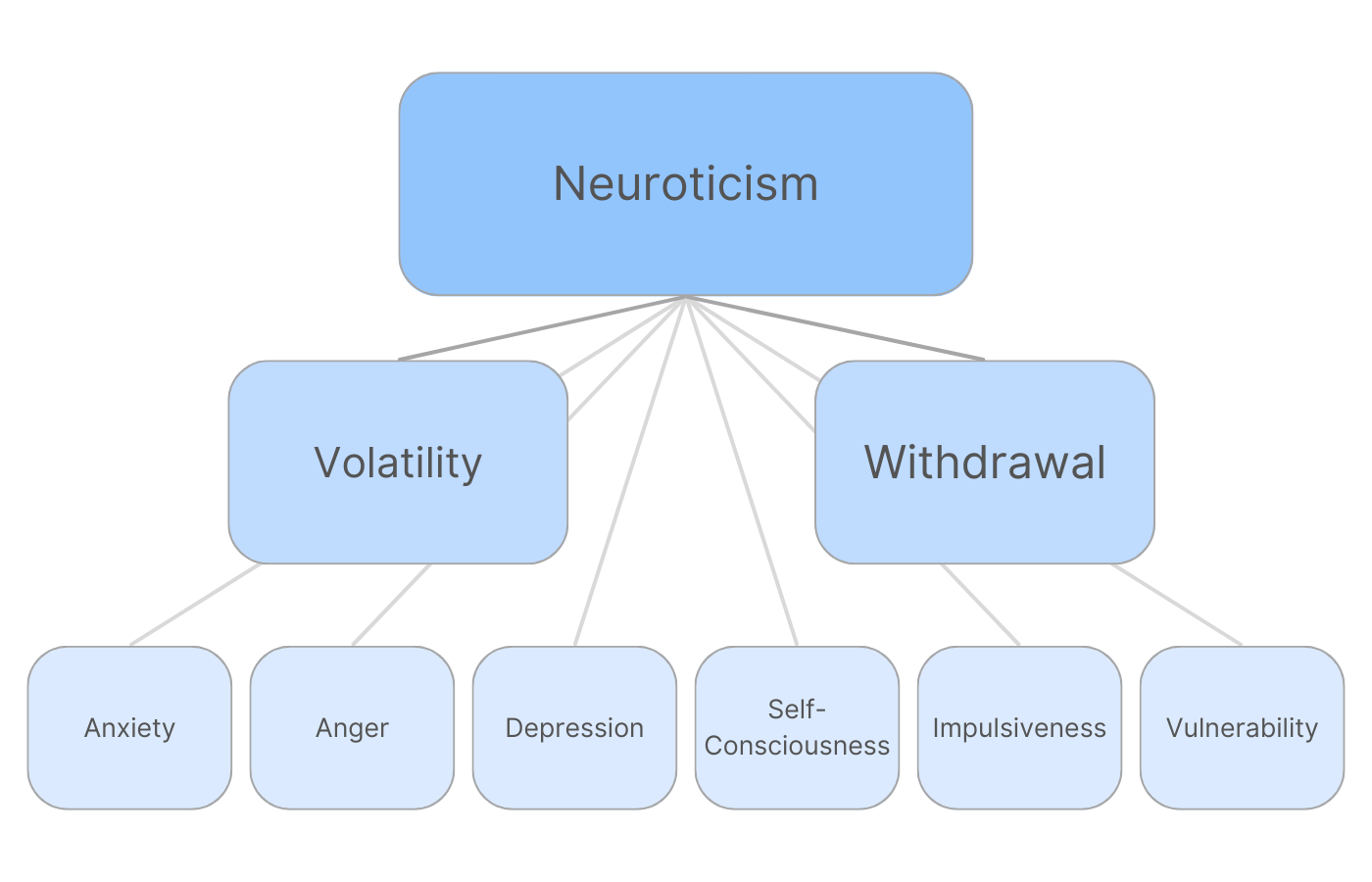
Each of these five dimensions can be broken down further into more specific dimensions, known as aspects and facets.
Extraversion
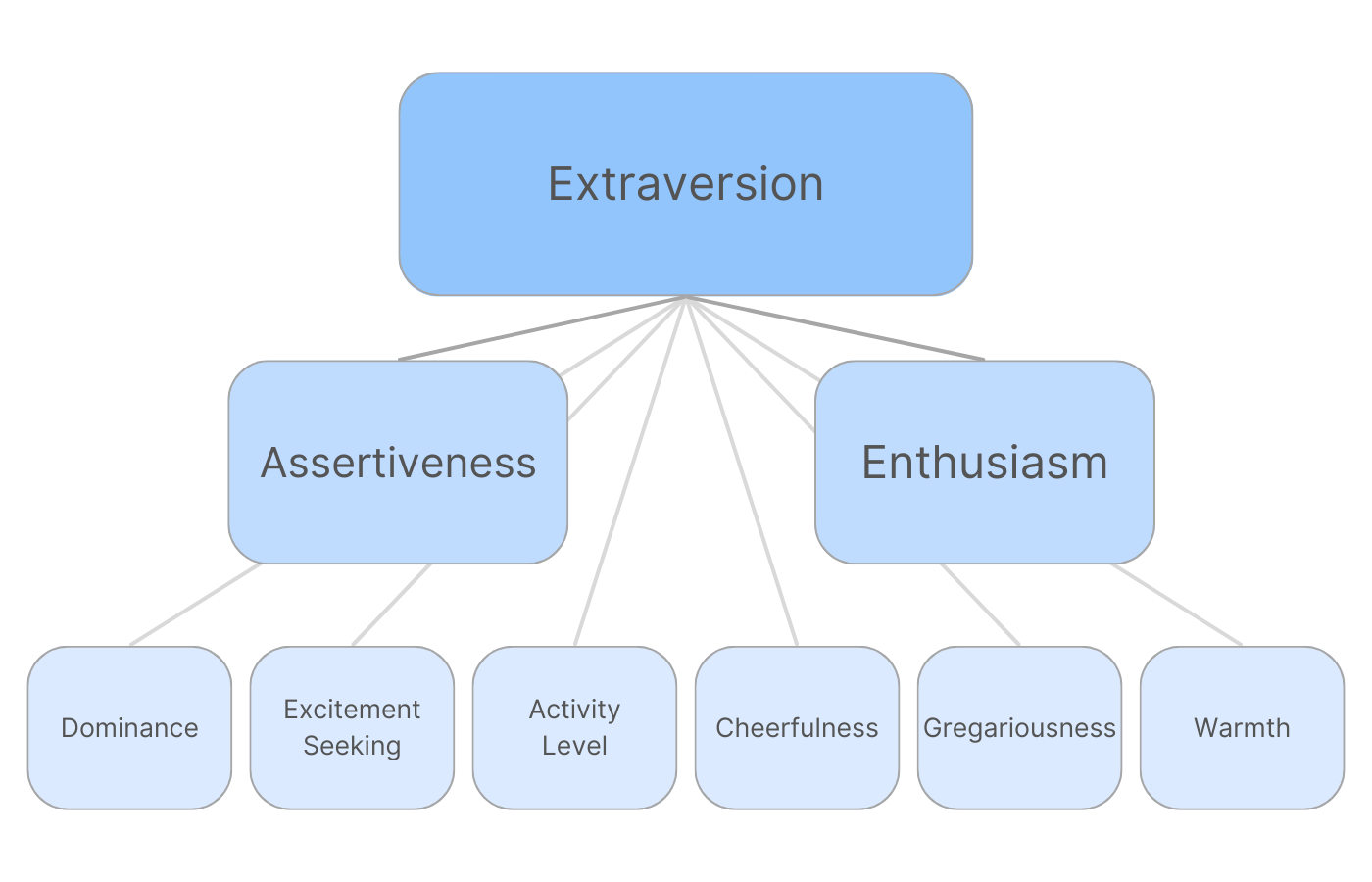
Agreeableness
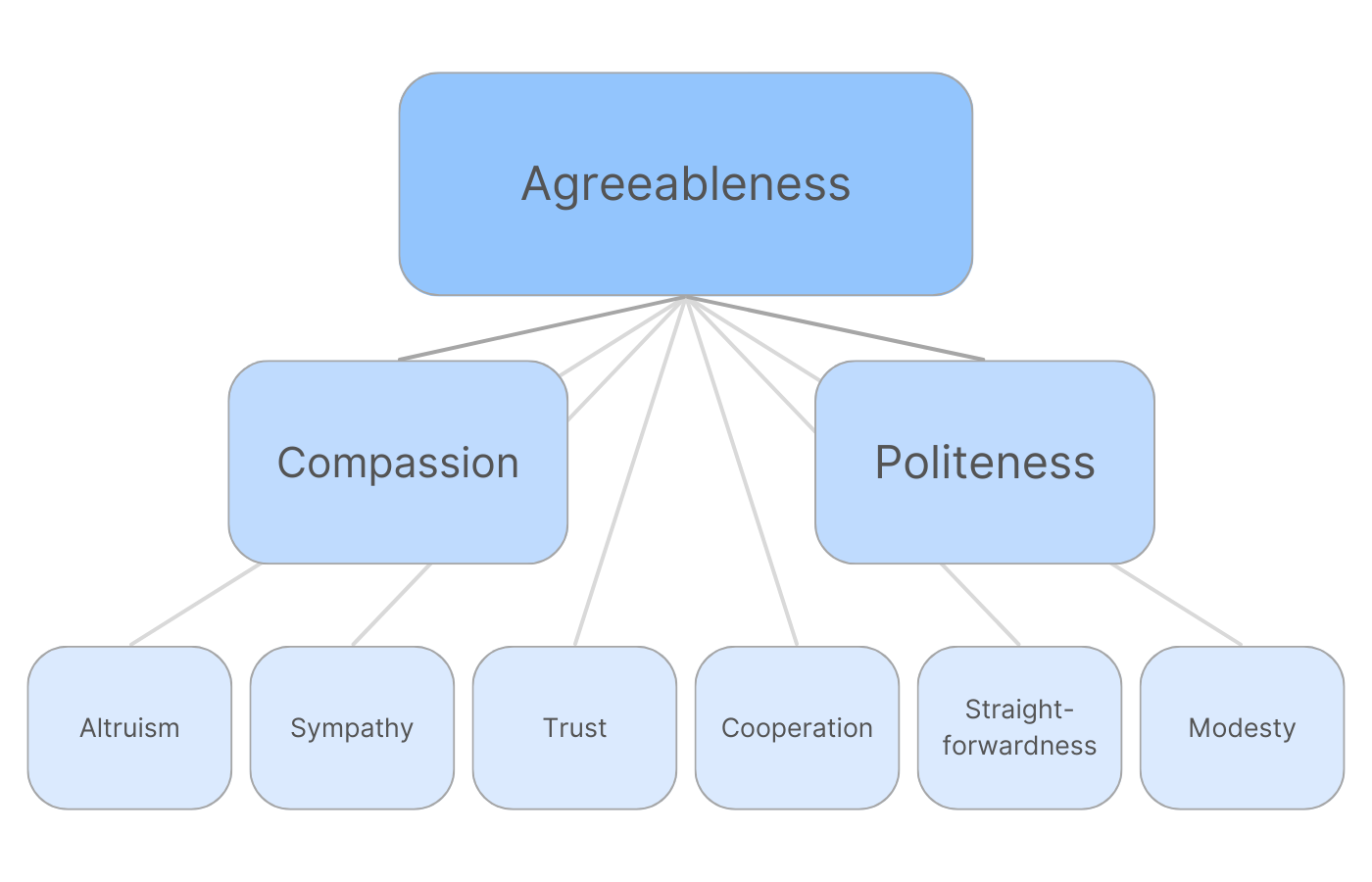
Conscientiousness
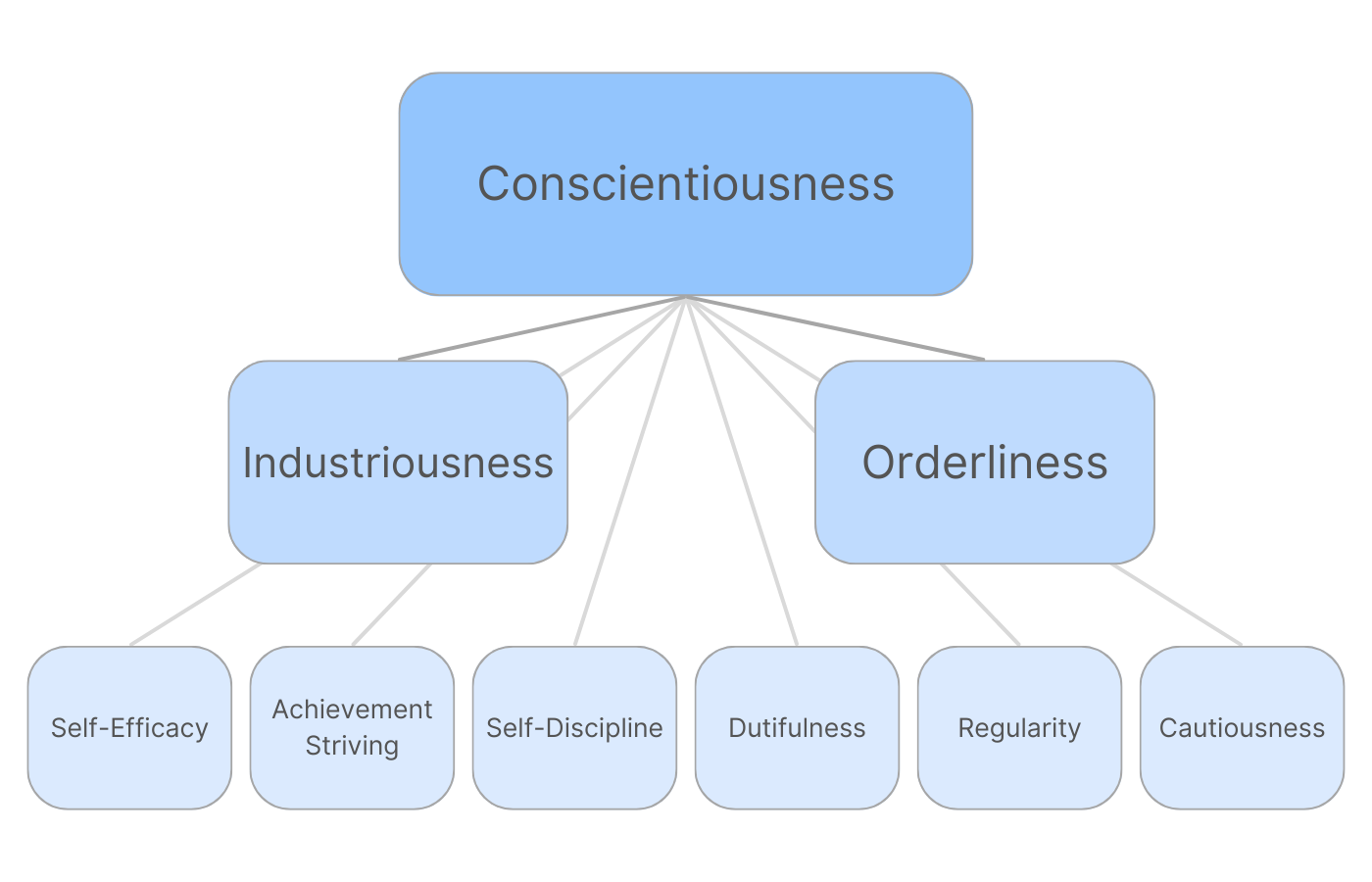
Neuroticism
Openness to Experience
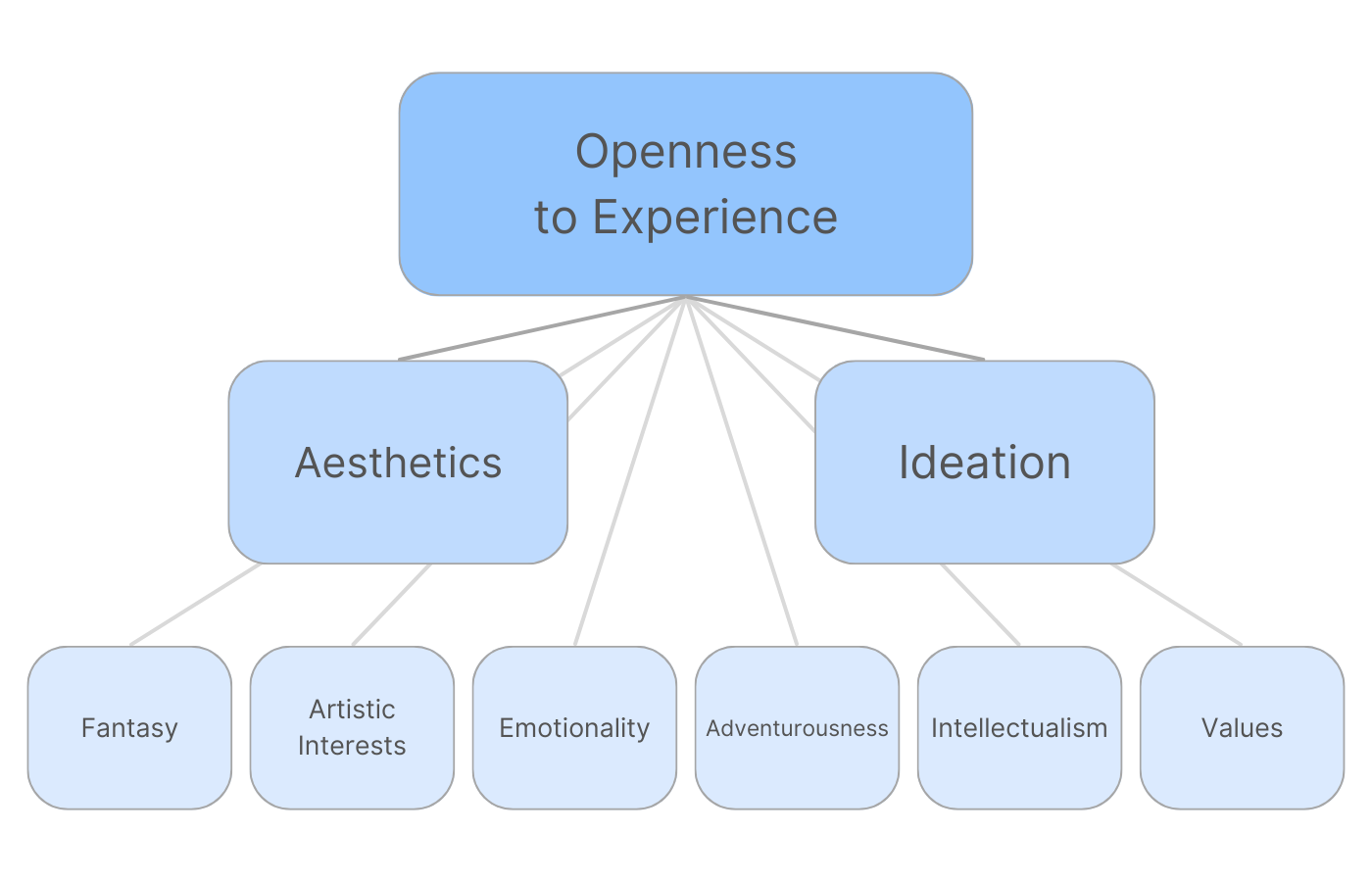
As more data is collected and analyzed, it’s possible that the structure of the Big Five will evolve. Unlike the Enneagram, the Big Five is not a theory set in stone — it is an attempt to describe the statistical pattern of personality traits from large research datasets.
Connections between the Enneagram and the Big Five
TraitLab has collected a massive dataset of thousands of individuals, their self-reported Enneagram type, and their Big Five dimensions as measured by standardized assessments. This dataset reveals how each type compares in terms of personality traits, strengths, career interests, and more.
For more details about this data, see The Skeptical Enneagram: Understand the Nine Personality Types with Real Data).
Big Five dimensions for each Enneagram personality type
Below, you’ll find every Enneagram type and a snapshot of their typical Big Five dimensions.
In each graph, darker blue areas show where most people in that type tend to score on a given Big Five dimension. Conversely, lighter, spottier blue areas show where fewer people in that type tend to score.
Click on the link in each type section for a more detailed analysis of that Enneagram type.
Type 1: The Reformer
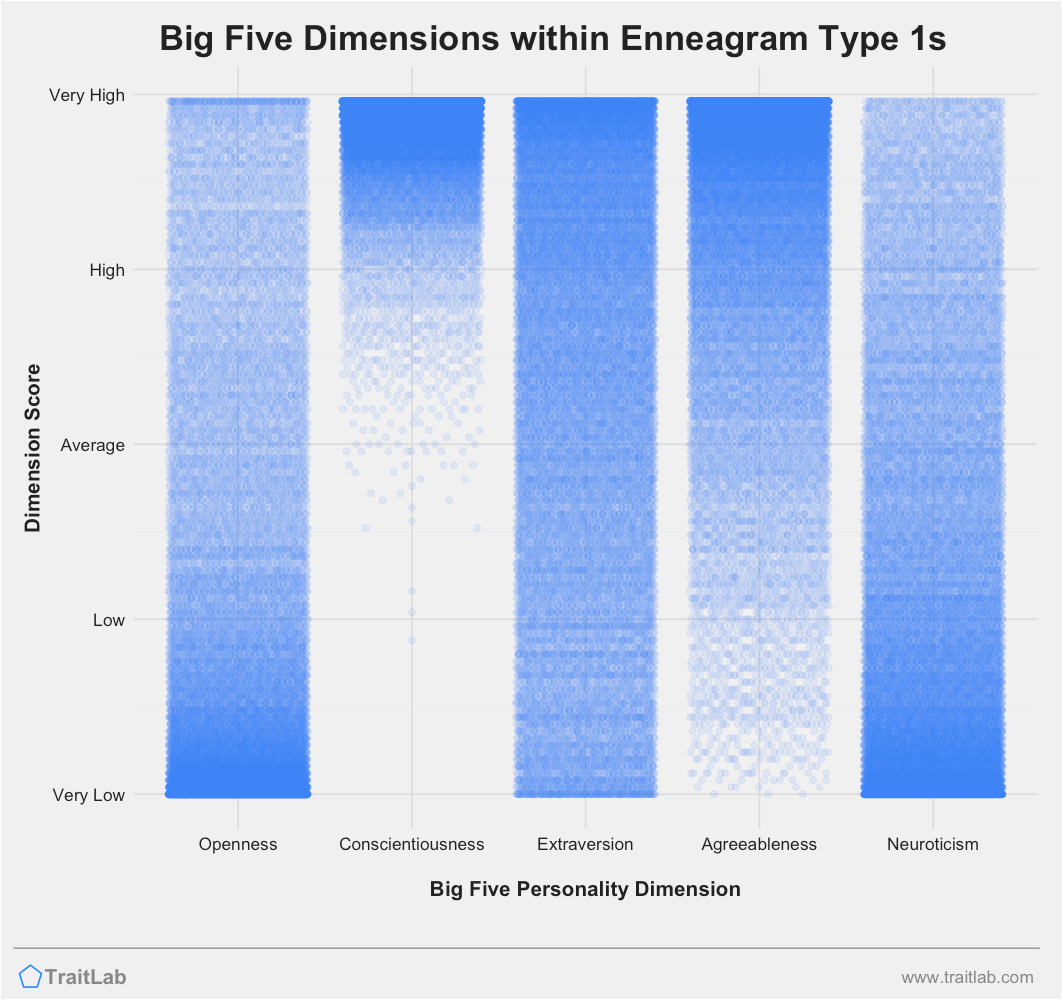
See the full Type 1 article for more details.
Type 2: The Helper
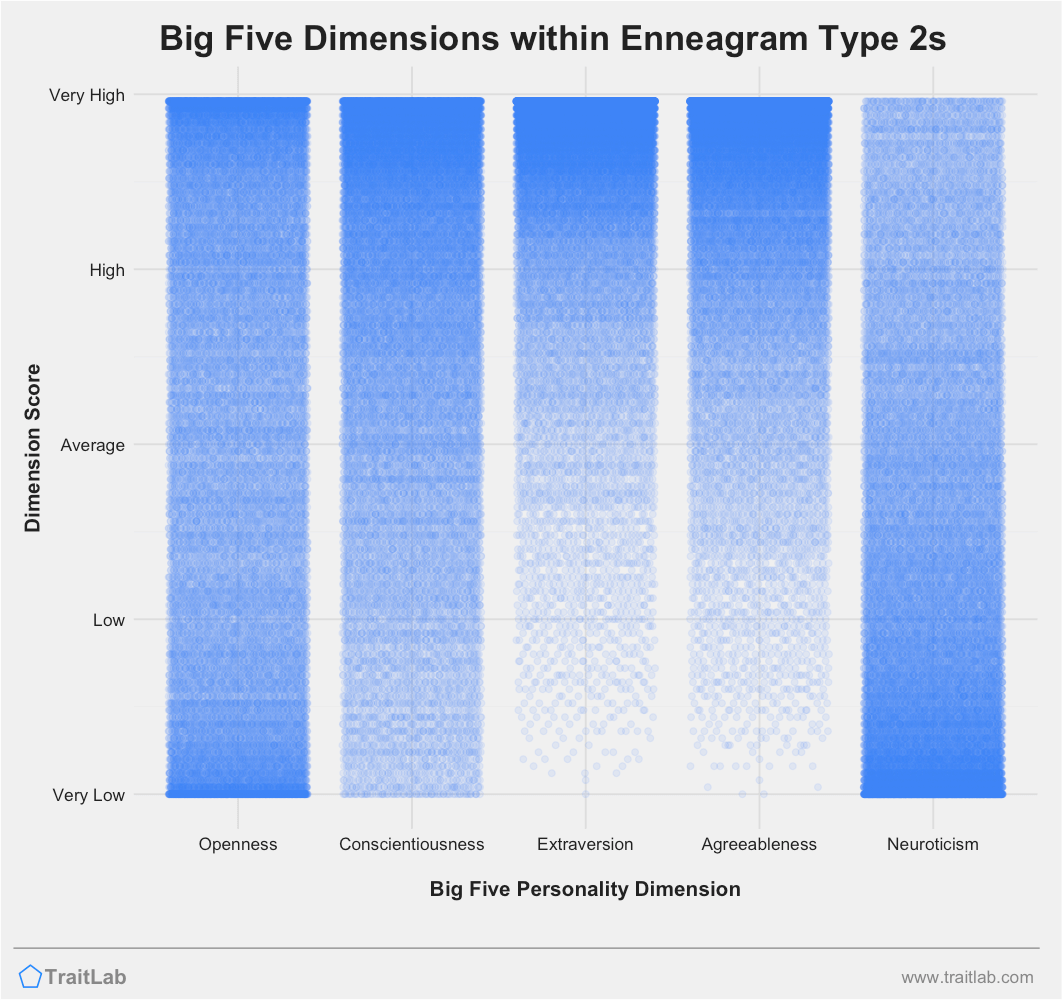
See the full Type 2 article for more details.
Type 3: The Achiever
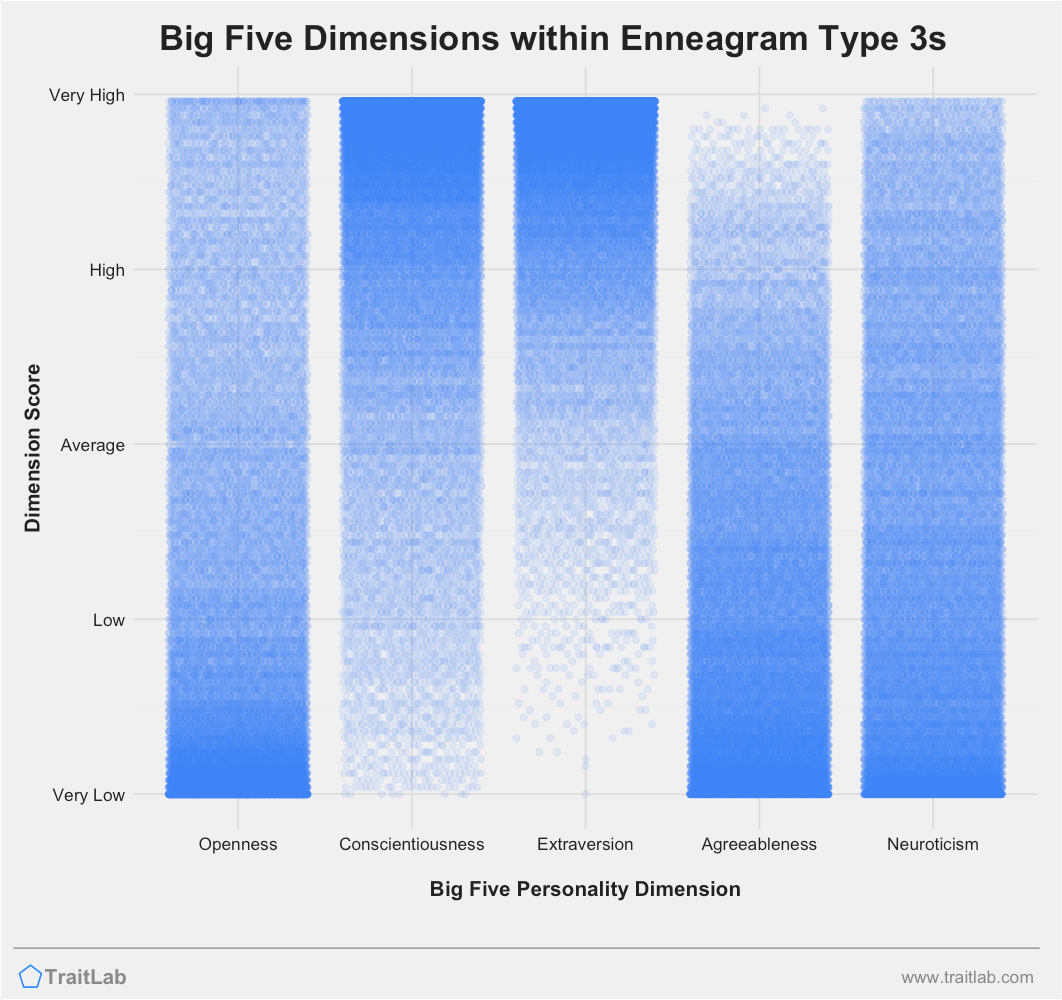
See the full Type 3 article for more details.
Type 4: The Individualist
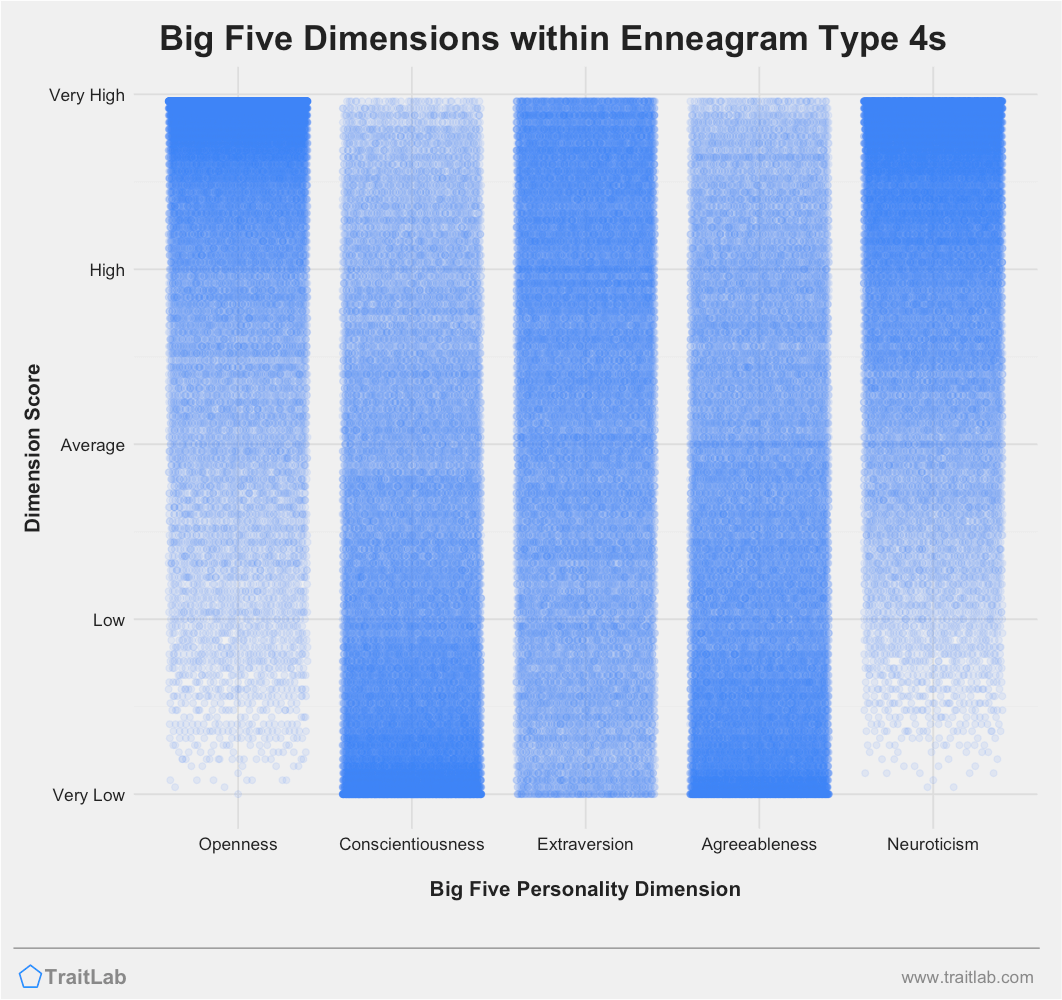
See the full Type 4 article for more details.
Type 5: The Investigator
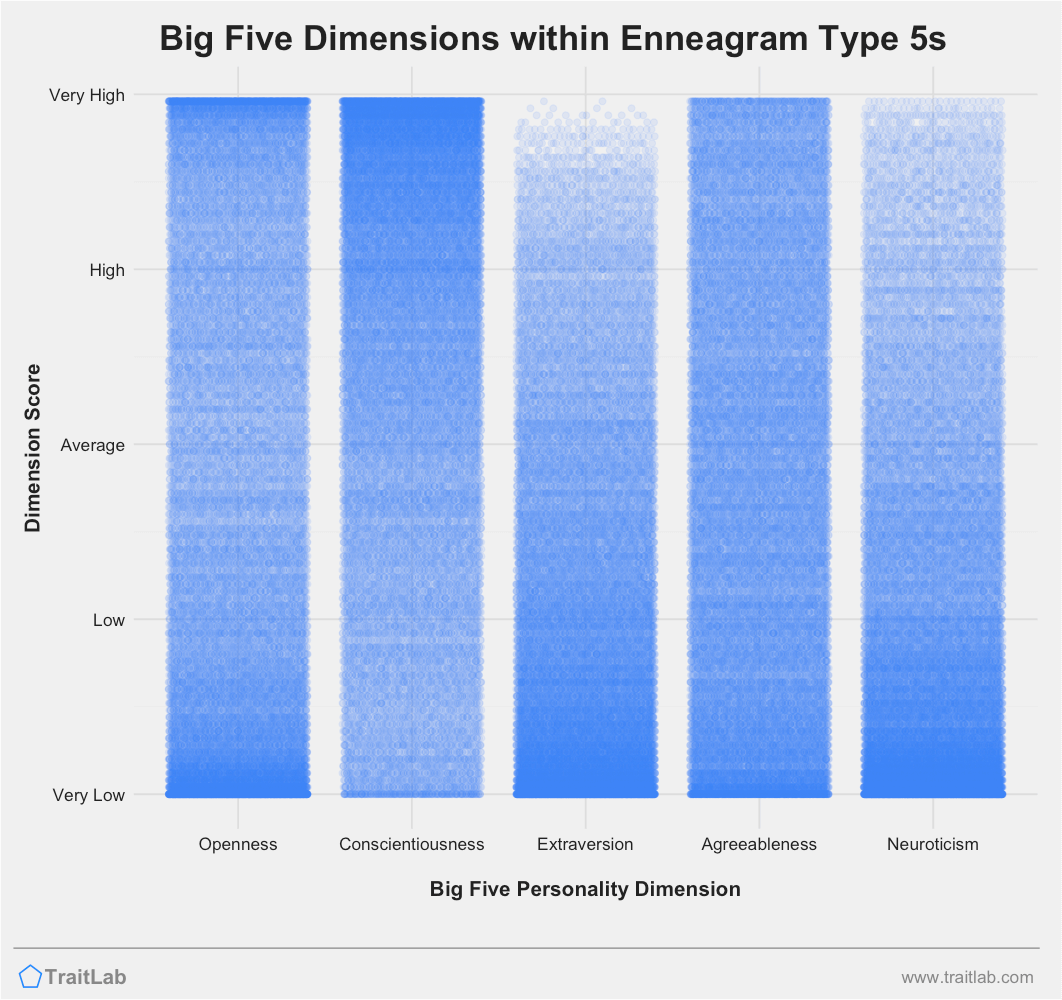
See the full Type 5 article for more details.
Type 6: The Loyalist
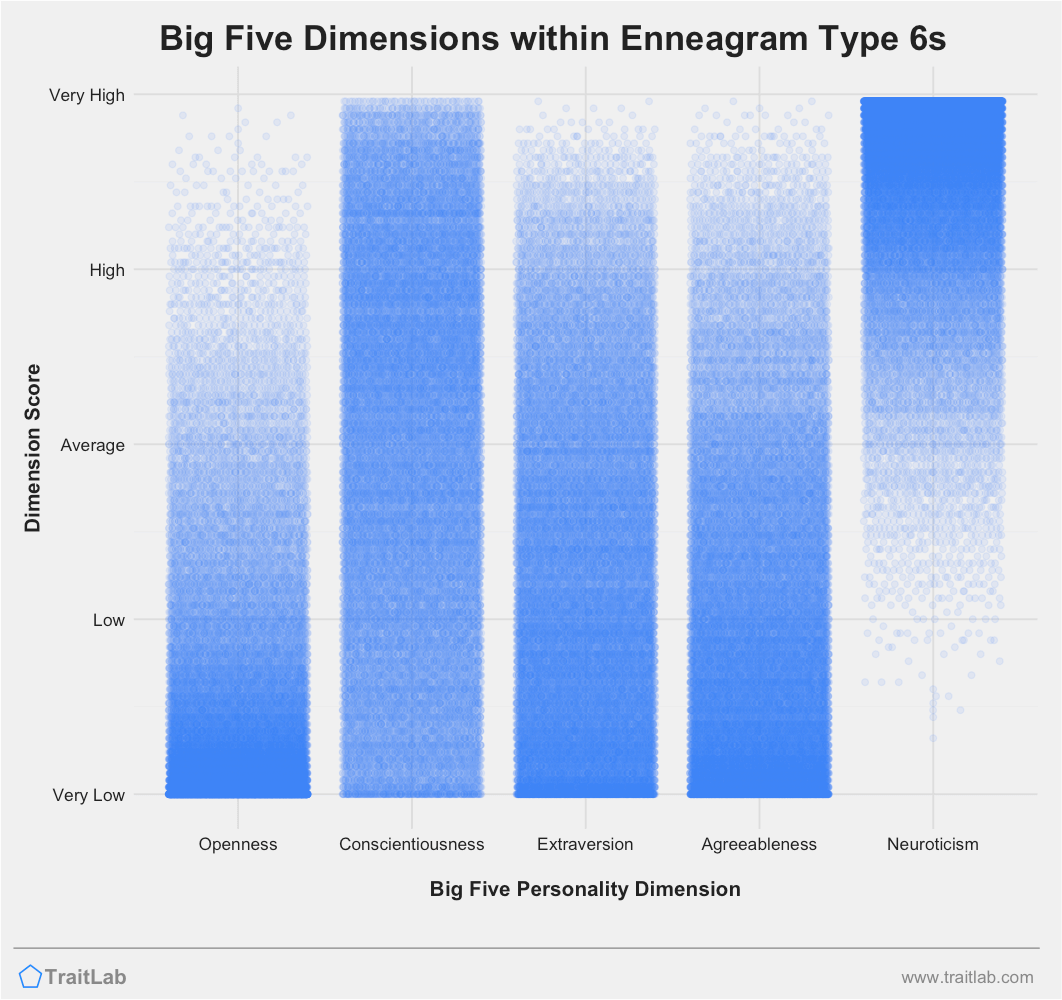
See the full Type 6 article for more details.
Type 7: The Enthusiast
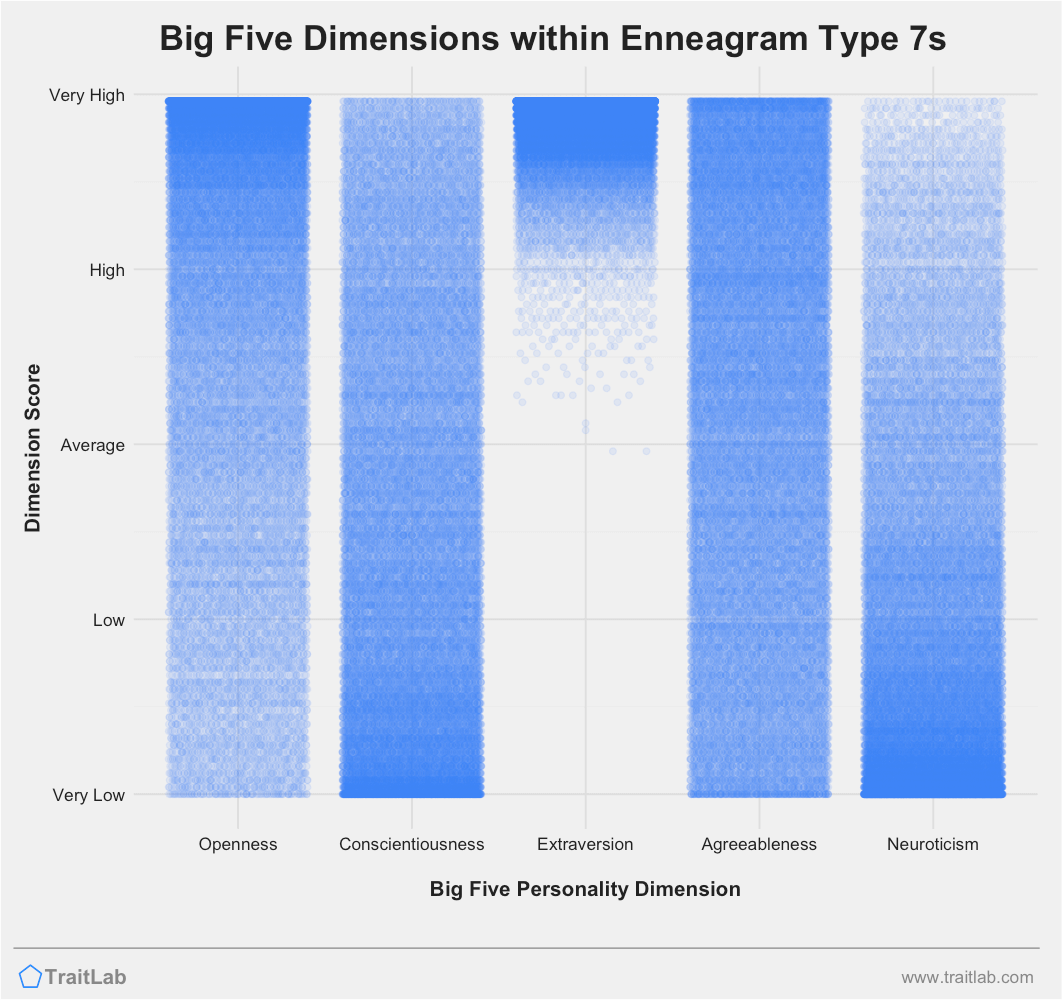
See the full Type 7 article for more details.
Type 8: The Challenger
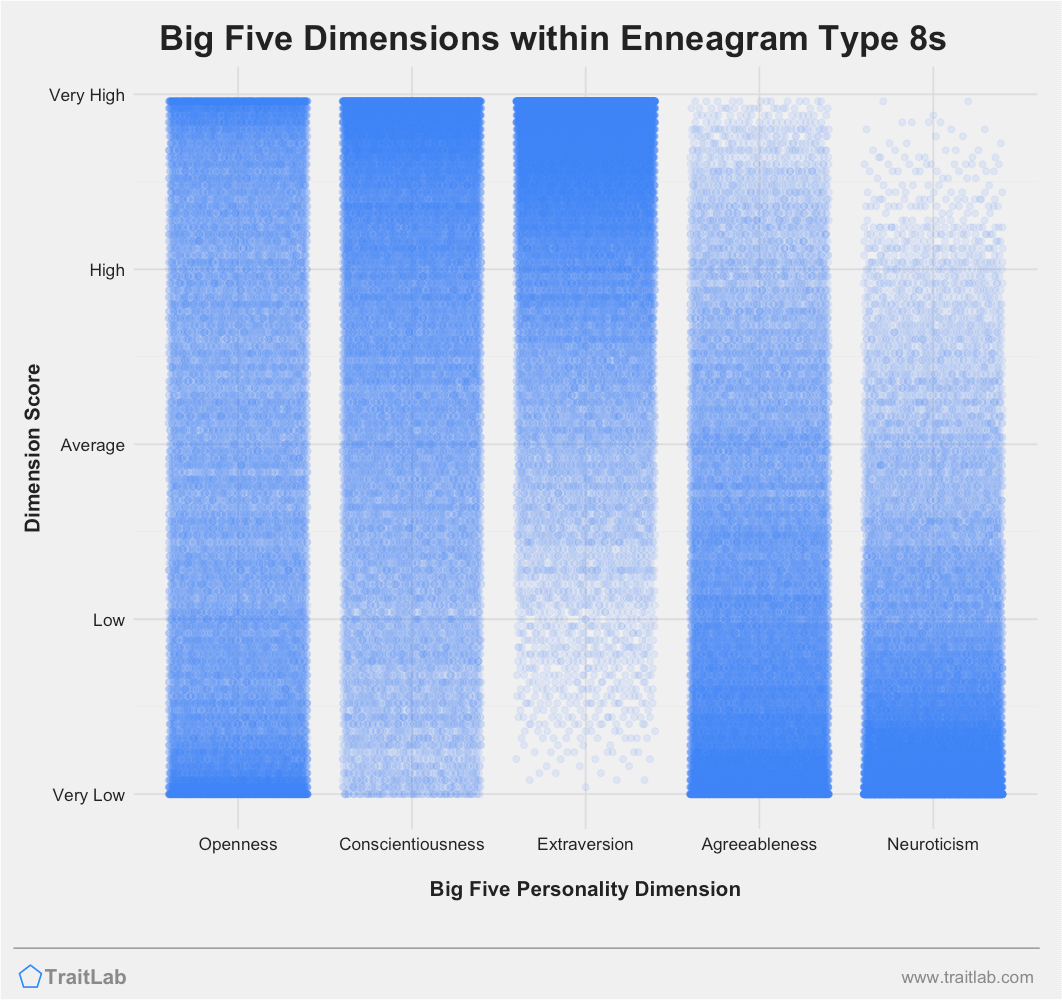
See the full Type 8 article for more details.
Type 9: The Peacemaker
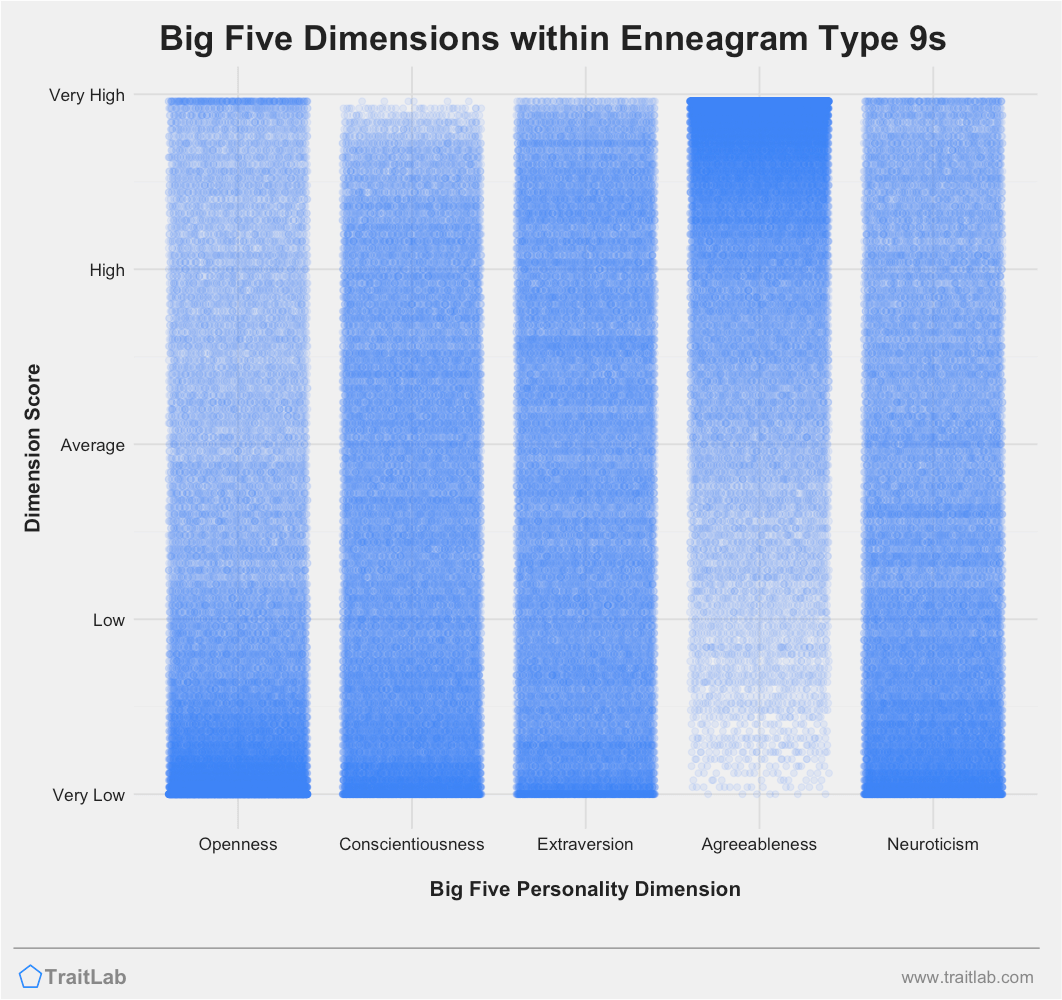
See the full Type 9 article for more details.
Suggested Reading
For more on the Enneagram and its relationship to personality traits, strengths, interests, and more, see The Skeptical Enneagram: Understand the Nine Personality Types with Real Data).
For more about the Big Five:
- Goldberg, L. R. (1990). An alternative “description of personality”: The Big-Five factor structure. Journal of Personality and Social Psychology, 59 (6), 1216.
- John, O. P., Naumann, L. P., & Soto, C. J. (2008). Paradigm shift to the integrative Big Five trait taxonomy: History, measurement, and conceptual issues.
For more on the theory behind the Enneagram:
- Chestnut, B. (2013). The complete Enneagram: 27 paths to greater self-knowledge. She Writes Press.
- Dameyer, J. J. (2001). Psychometric evaluation of the Riso-Hudson Enneagram type indicator. California Institute of Integral Studies, San Francisco, CA.
- Daniels, D., & Price, V. A. (2000). Essential enneagram: The definitive personality test and self-discovery guide (Revised & Updated). Harper Collins.
- Effross, W. A. (2003). Owning Enlightenment: Proprietary Spirituality in the “New Age” Marketplace. Buffalo Law Review, 51, 483.
- Hook, J. N., Hall, T. W., Davis, D. E., Van Tongeren, D. R., & Conner, M. (2021). The Enneagram: A systematic review of the literature and directions for future research. Journal of Clinical Psychology, 77(4), 865-883.
- Gamard, W. S. (1986). Interrater reliability and validity of judgments of enneagram personality types. California Institute of Integral Studies (Unpublished doctoral dissertation). California Institute of Integral Studies, San Francisco, CA.
- Matise, M. (2019). The enneagram: An enhancement to family therapy. Contemporary Family Therapy, 41(1), 68-78.
- Riso, D. R., & Hudson, R. (1999). The wisdom of the Enneagram: The complete guide to psychological and spiritual growth for the nine personality types. New York: Bantam Books.
- Wagner, J. P. (1999). WEPSS: Wagner Enneagram Personality Style Scales. Western Psychological Services.